
Current Lab Members
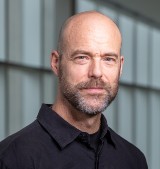 J. Bruce Morton
Principal Investigator
Dr. J Bruce Morton completed his PhD at the University of Toronto under the supervision of Dr. Sandra Trehub and Dr. Philip David Zelazo, and then worked as a post-doctoral fellow in the laboratory of Dr. Yuko Munakata. He has served as a Professor in Department of Psychology at the University of Western Ontario since 2002, and is now a faculty member of the Graduate Programme in Neuroscience and a member of the Centre for Brain and Mind. Dr. Morton’s research interests concern the development of cognitive control and its association with changes in prefrontal cortex function.
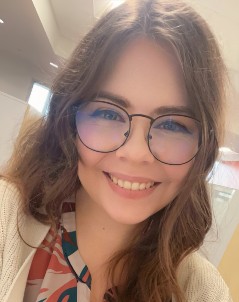 Nichola Jenkins
Lab Manager
I feel truly fortunate to be the Lab Manager for the Cognitive Developmental Neuroimaging Lab, where I have the opportunity to work alongside an incredible research team that continually inspires me to learn and grow. I hold a degree in Psychology and Human Development from Brescia University College, along with hands-on experience as a Child and Youth Care Practitioner.
In my role, I support a wide range of lab activities, including coordinating research projects, managing day-to-day operations, and assisting with student training and development. I am involved in the preparation and coordination of neuroimaging studies, including supporting participant recruitment, helping prepare children and families for imaging sessions, and contributing to research ethics applications and data management.
One of the most rewarding aspects of my work is mentoring students and watching them develop into confident, capable researchers. Every day in the lab brings something new, and I value being part of a team that is advancing our understanding of cognitive development through neuroimaging research.
 Samantha Goldsmith
Graduate Student
Hello! I am a doctoral student in the Clinical Psychology Program at Western, where I am lucky to work with Dr. Bruce Morton and the other members of the CDNL. My research is focused on executive functioning, its development in typically- and atypically-developing populations, and its assessment in clinical settings. I have studied executive functioning in the context of various individual difference factors, including emotion regulation abilities, second language skills, and psychological well-being. My doctoral dissertation is investigating the use of gamified technology for the assessment of executive functioning in pediatric and complex clinical populations. As part of a multidisciplinary team, I am working to develop this technology into an evidence-based assessment with significant implications for the diagnosis and treatment of clinical disorders in our most vulnerable populations. Clinically, I am interested in working with children and adolescents with developmental, academic, and mental health challenges. To date, I have been fortunate to complete clinical placements in a variety of settings, including London’s Child and Parent Resource Institute, Western’s Child and Youth Development Clinic, the Southwest Centre for Forensic Mental Health, and (soon) the Thames Valley District Schoolboard. As a member of Western and the CDNL, I am able to adopt a true scientist-practitioner approach and pursue both research opportunities and clinical placements in the fields of cognitive functioning, evidence-based assessment, and pediatric mental health.
 Amira Hmidan
Graduate Student
I am a doctoral student in the Clinical Science and Psychopathology program at Western University. My research examines the impact of early life adversity on childhood development, with a focus on executive functioning, cognition, behaviour, and decision-making. Prior to joining CDNL, I earned a master’s degree in Counselling Psychology under the supervision of Dr. Emma Duerden, where I investigated the effects of screen time and parental stress on children’s socioemotional development. Alongside my research, I completed a year-long practicum at the Thames Valley District School Board, where I developed my skills in psychoeducational assessment. These experiences deepened my interest in the factors that shape children’s development, particularly from a neurodevelopmental perspective, which ultimately led me to join Dr. J. Bruce Morton’s lab!
My current research examines how individual differences in early life adversity are associated with amygdala connectivity. I am particularly interested in advancing multivariate methods to better capture early life experiences in both clinical and typically developing samples of children. Clinically, my interests include interventions for neurodevelopmental, internalizing, and externalizing problems in children, as well as somatic-based approaches to treating post-traumatic stress disorder. To date, I’ve completed clinical placements at the Thames Valley District School Board, Navigating Onward, and Parkwood Institute Mental Health.
 Ronald Auguste
Graduate Student
Hi! I come from Trinidad & Tobago, where I have been a mental health practitioner for the past 10 years. During that time, it became clear to me that ADHD was and is an understudied condition throughout the Latin America and Caribbean region. I am, therefore, grateful and excited for the opportunity to be a member of the CDNL team headed by Dr. Morton. As a graduate student at Western, I hope to develop the scientific skills to analyze the phenomenon that is ADHD, as it manifests in my home region, with the ultimate goal of developing indigenous diagnostic tools and bespoke treatment protocols.
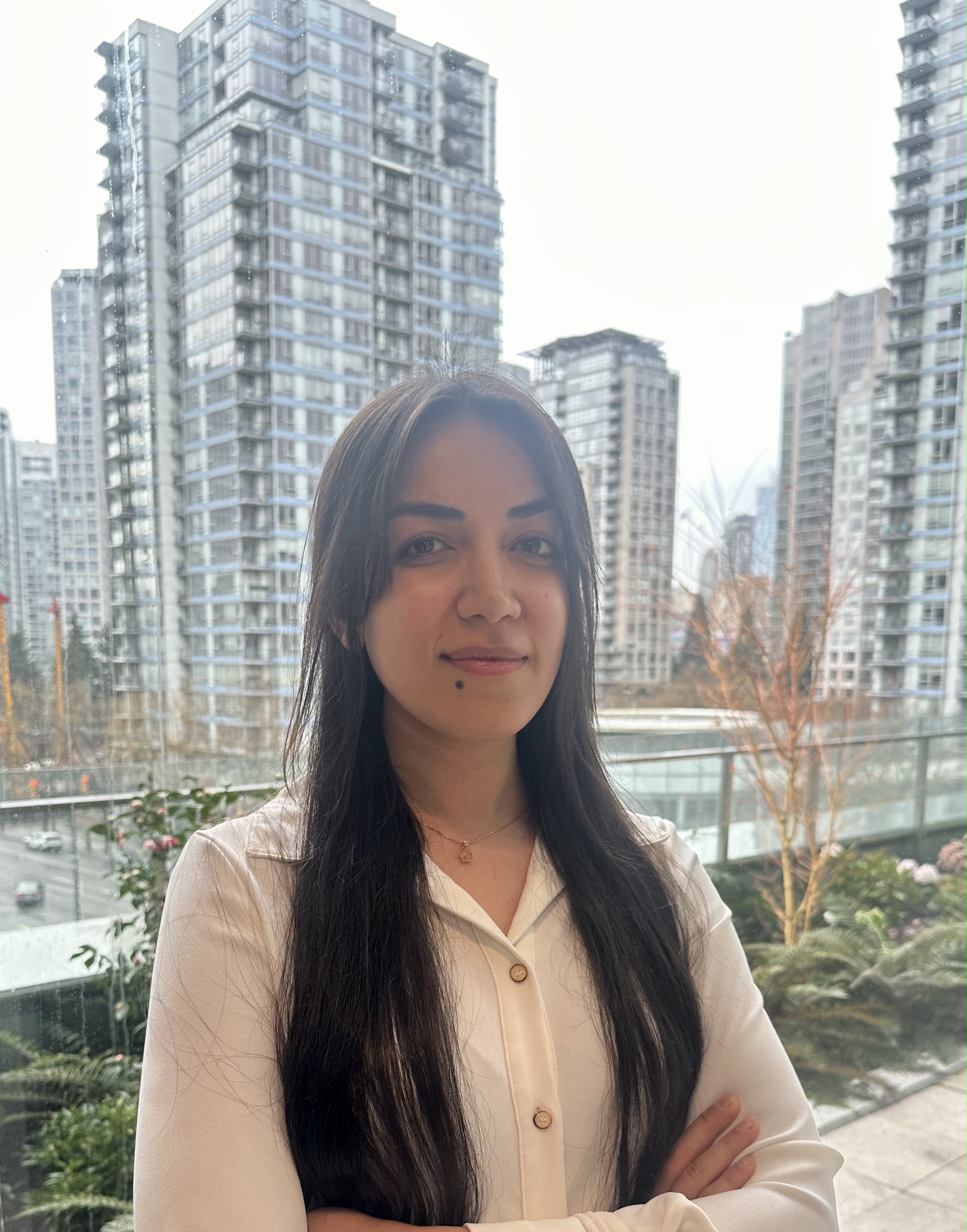 Nya (Negar) Yazdi
Graduate Student
Hi! I am a Neuroscience PhD student in Dr. J. Bruce Morton’s lab, where I study how dopaminergic midbrain circuits support reward learning across development. Using high-resolution 7T fMRI and diffusion MRI (DTI), my research models BOLD signals in the substantia nigra and ventral tegmental area to capture reward prediction error signals, and investigates how midbrain’s functional and structural connectivity with cortical and striatal targets changes from adolescence to adulthood. By combining computational modeling, developmental comparisons, and multimodal neuroimaging, my work aims to provide new insights into how reward systems mature and guide learning.
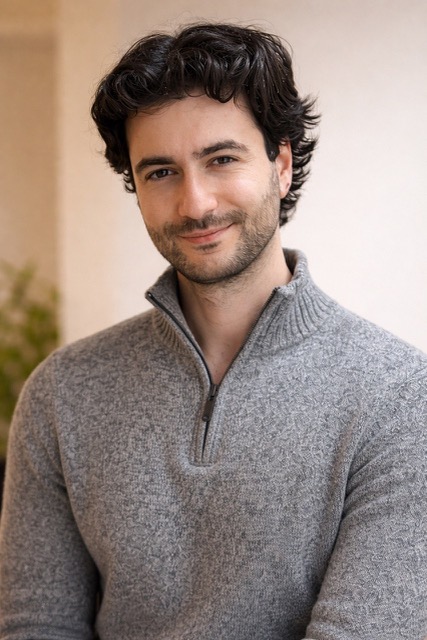 Erfan Zarenia
Graduate Student
I’m a Master’s student in the Neuroscience Graduate Program, working with Dr. J. Bruce Morton in the Cognitive Development and Neuroimaging Lab (CDNL). I study how dopamine circuits mature during adolescence. I focus on two midbrain regions, the substantia nigra and ventral tegmental area, treating them as structured, heterogeneous systems rather than uniform regions. Using ultra high-resolution 7T diffusion MRI and tractography, I map how their subregions connect across the brain and how these connections change with age. The goal is to characterize age-related structural organization and connectivity of these nuclei, providing a foundation for later work linking dopamine circuitry to behavior and atypical development.
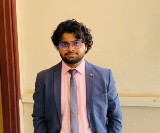 Utkarsh Sukla
Graduate Student
I am a doctoral researcher in the Cognitive Development and Neuroimaging Laboratory under the supervision of Dr. J. Bruce Morton. My current research revisits the “bilingual advantage” debate, examining whether and how bilingual experience shapes executive attention using large, cross-cultural samples. More broadly, my interests are grounded in the cognitive neuroscience approach and informed by an interdisciplinary perspective that connects multiple levels of human cognition. During my academic career, I aim to combine experimental, psychophysiological, and neuroimaging methods to study the dynamics of brain systems supporting cognition. I am particularly interested in executive functioning, language comprehension, and higher-order cognitive processes, and how these mechanisms interact to give rise to complex behavior. Before beginning my PhD, I completed an MSc in Cognitive Science at the Centre of Behavioural and Cognitive Sciences, India, where I examined irony comprehension in Hindi–English bilinguals to investigate how cognitive, linguistic, and metalinguistic processes interact during complex language interpretation. As I advance in my doctoral work, I aim to deepen my methodological expertise and contribute to a more precise understanding of human cognition.